

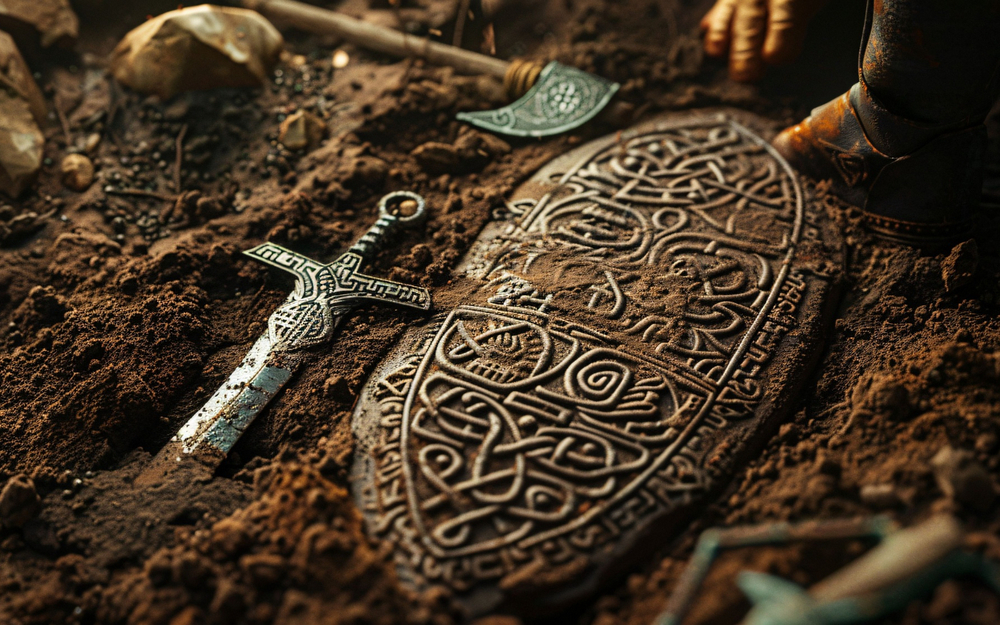
Celtic Cosmogony presents us with a unique vision of the origin of the world — not as an isolated event, but as a living process marked by conflicts, cycles, and the deep connection between nature and divinity.
Unlike other traditions that seek to explain the beginning of the cosmos in a linear way, the Celts constructed a narrative in which creation blends with the very transformation of the land and its peoples. Before we delve deeper into this universe, it is worth remembering that many cultures also developed their own myths of the origin of the universe, each reflecting their beliefs and ways of understanding the world.
Among these examples, we can mention Dogon Cosmogony, which combines philosophy and spirituality in a complex reading of the cosmos, and Tupi-Guarani Cosmogony, where creation is linked to a continuous process of renewal and balance.
However, it is in the Celtic tradition that we find a narrative especially marked by mythical invasions, disputes among divine beings, and the sovereignty of nature as a central force. More than explaining the origin of the world, this cosmogony reveals the very identity of a people and their sacred relationship with the land.

The world of the druids: context and nature of the Celtic tradition
To understand Celtic Cosmogony, it is crucial to appreciate the nature of its transmission and its central values:
- Oral tradition and the role of the druids: Celtic culture was fundamentally oral. The druids, the priestly and learned class, were the guardians of knowledge, including mythology, law, and history. They considered writing vulgar for such sacred matters. Consequently, the records were only written down in the Middle Ages by Irish and Welsh Christian monks. This means that the narratives were, to varying degrees, filtered and influenced by the Christian worldview, while still preserving an unmistakable pagan mythological core;
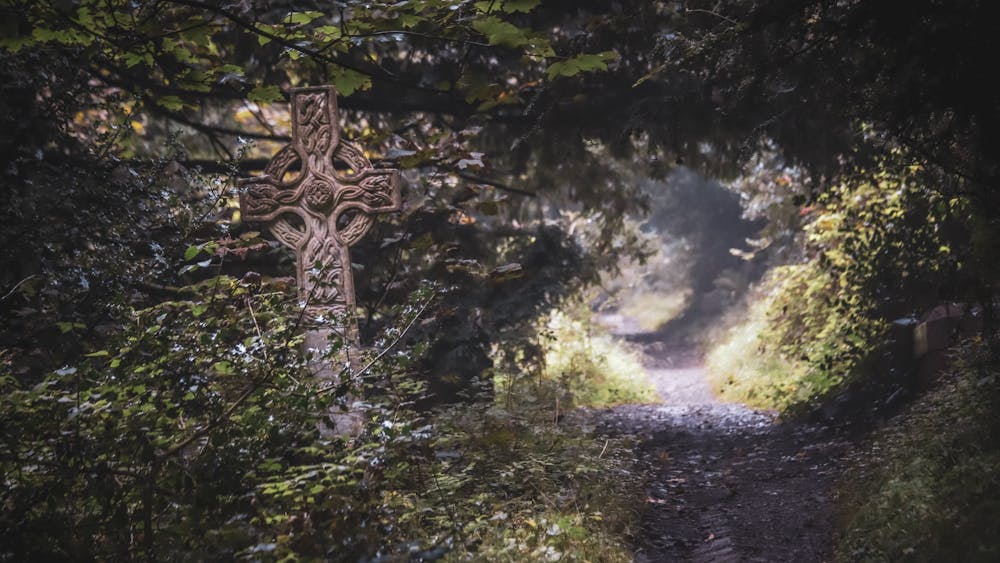
- An animistic and interconnected worldview: the Celtic world was animistic. Everything in nature — rivers, mountains, forests, rocks — possessed a spirit (genius loci) and could be sacred. The land was not a resource, but a living entity with which one established a relationship. Creation, therefore, is not about the origin of matter, but about the imposition of a cultural and sacred order upon an already existing and conscious landscape;
- The concept of sovereignty: a central theme is the Sovereignty of the land, often personified as a goddess (Ériu, the goddess who gave Ireland its name — Éire). The right of a king to rule depended on his sacred marriage to this goddess, ensuring the prosperity and fertility of the land. The narrative of the “invasions” is, to a great extent, the story of how different peoples conquered this right.
The narrative of creation: the Lebor Gabála Érenn and the invasions of Ireland
The main Irish cosmogonic/genealogical narrative is the Lebor Gabála Érenn, which describes Ireland being taken over by six waves of mythical peoples.
The world before Ireland: the flood and the first inhabitants
The narrative connects with the biblical story of the Flood. Cessair, a granddaughter of Noah, is said to have arrived in Ireland before the great flood with a group of companions, but all perished in the waters. This is a clear Christian interpolation intended to link Irish history to the biblical canon.
After the flood, Ireland — a virgin and wild land — was populated by successive peoples:
- The people of Partholón: the first to arrive after the flood. They clear the land, open plains, and establish agriculture. However, they are wiped out by a plague after 300 years, and Ireland becomes empty again;
- The people of Nemed: they arrive later and repeat the process of civilization, fighting against the fearsome Fomorians — grotesque beings who represent the chaotic and destructive forces of nature, often associated with the sea and darkness. After fierce battles and plagues, the people of Nemed are scattered.
The arrival of the gods: the Tuatha Dé Danann
The fourth and most famous invasion is that of the Tuatha Dé Danann (“The People of the Goddess Danu”). They are the tribal gods of Ireland, beings of immense magical power and beauty.
- Origin and attributes: it is said they came from the “northern islands of the world,” where they acquired knowledge of the druidic arts. They arrived in Ireland enveloped in a “cloud of magical darkness,” bringing with them the four treasures of their cities of origin: the Spear of Lugh, the Sword of Nuada, the Cauldron of Dagda, and the Stone of Fal (the Lia Fáil), which cried out when the true king stepped upon it;
- The First Battle of Mag Tuired: the Tuatha Dé Danann confronted the Fir Bolg, the previous inhabitants, and defeated them, conquering the sovereignty of Ireland. In this battle, their king, Nuada, has his arm severed and, being imperfect, must temporarily abdicate;
- The Second Battle of Mag Tuired (the great battle): this is the epic climax of Irish mythology. The Tuatha Dé Danann, now led by the restored king Nuada and the young and brilliant god Lugh Lamhfada (“the god of all arts”), face their archetypal enemies: the Fomorians, led by the terrible Balor of the Evil Eye. The battle is a cosmic struggle between order (the Tuatha Dé) and primordial chaos (the Fomorians). Lugh kills Balor with a sling, and the Tuatha Dé Danann emerge victorious, firmly establishing their dominion over Ireland and inaugurating an era of prosperity.
The arrival of humans: the Milesians and the pact with the gods
The final invasion is that of the Milesians (“the Sons of Míl”), considered the ancestors of the Gaels. They represent historical humanity. Upon arriving in Ireland, they confront the Tuatha Dé Danann. Using their magic, the latter create a storm to prevent their landing, but the Milesians manage to overcome the challenge.
After negotiations and conflicts, an agreement is reached: Ireland will be divided. The Milesians will remain in the surface world, the visible and physical realm. The Tuatha Dé Danann withdraw to the Otherworld (the Sídhe), which coexists with the human world, inhabiting mounds, hills, and underground fortresses.
They become the “fair folk” or “the good people” of later folklore. The creation of the world, as humans know it, is thus complete: a land shared between tangible reality and a divine, invisible, yet ever-present realm.
Analysis and meaning: the land, the pact, and the nature of the divine
Celtic Cosmogony, through this narrative of invasions, encodes a unique and powerful worldview:
- Cosmogony as sacred history and geography: unlike other traditions that occur in a mythical time outside of history, Celtic creation is the very history of the people and the landscape. Each battle, each reign, explains the geography of Ireland, the name of a place (through the Dindsenchas, the “Lore of Places”), and the origin of social institutions. Creation is an ongoing process of naming and cultural dominion;
- The dialectical relationship with chaos (Fomorians): the Fomorians are not merely “evil.” They are a primordial and necessary force. They represent the wild, dangerous, and untamed aspects of nature, with which even the gods must negotiate and struggle. Order does not eliminate them, but keeps them at bay, in a tense balance. This eternal conflict reflects the reality of a life dependent on, yet also at the mercy of, a powerful environment;
- Fallible and non-omnipotent gods: the Tuatha Dé Danann are immensely powerful, but not omnipotent or immortal in the strict sense. They can be wounded, deceived, and defeated. They are a divine race, but with deeply human characteristics: jealousy, passions, flaws, and a clear need to prove themselves through combat and wisdom;
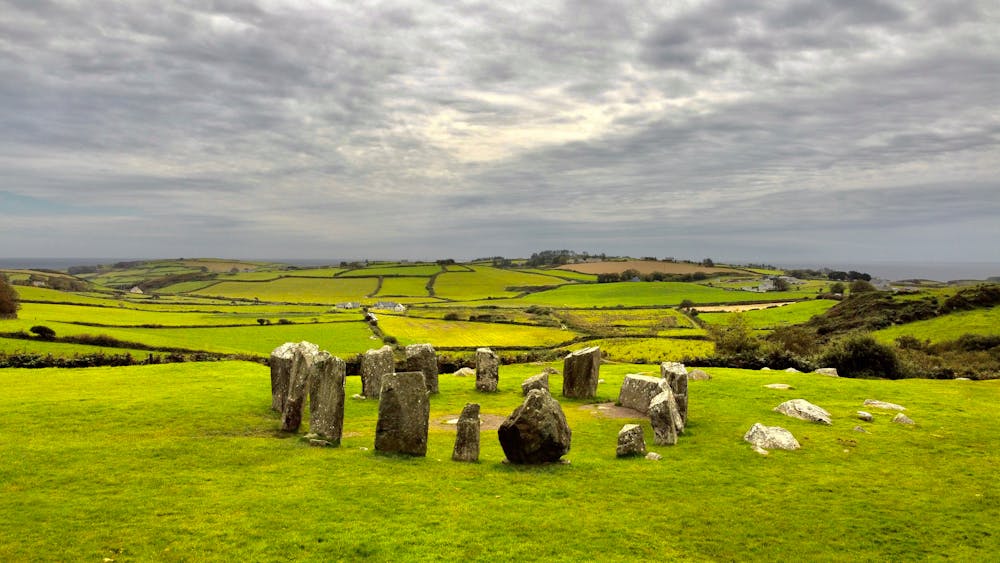
- The coexistence of worlds: the final solution of the narrative — the division between the human world and the Sídhe — is brilliant. It establishes a non-dualistic worldview. The divine is not in the sky, but within the earth. The sacred is not transcendent, but immanent. The entire Celtic landscape is potentially a gateway to the Otherworld, making life an experience constantly permeated by mystery and the potential encounter with the divine.
Conclusion
Celtic Cosmogony, with its emphasis on land, sovereignty, and cycles of conquest, offers a deeply rooted and magical vision of creation.
The world was not created by a distant act of will, but was conquered, loved, and named into existence by successive divine and human peoples, in an eternal struggle to impose cultural order upon natural chaos. It is a narrative that explains not the “how” of the physical universe, but the “why” of a people belonging to a specific land and the sacred terms of that belonging.
This vision of a living, interconnected world, inhabited by accessible divinities in hills and forests, stands in striking contrast to the imperial cosmogonies of the Mediterranean and the fatalism of the North.
Continue exploring how different cultures explain the origin of the universe, and read about Yoruba Cosmogony, Shinto Cosmogony, and Zoroastrian Cosmogony.
See you next time!
May the Light of Love be the guide of all paths, at all times, in all circumstances, with all the people. And may Love foster Peace!
Bibliographical references
REES, Alwyn; REES, Brinley. Celtic Heritage: Ancient Tradition in Ireland and Wales. Thames & Hudson, 1961.
A seminal study that analyzes the patterns and structures of Irish and Welsh Celtic myths, including the Lebor Gabála Érenn.
GREEN, Miranda J. The Celtic World. Routledge, 1995.
A comprehensive reference work offering archaeological, historical, and mythological context.
MACKILLOP, James. A Dictionary of Celtic Mythology. Oxford University Press, 2004.
An indispensable resource for consulting names, places, and specific concepts of Celtic mythology with precision.