


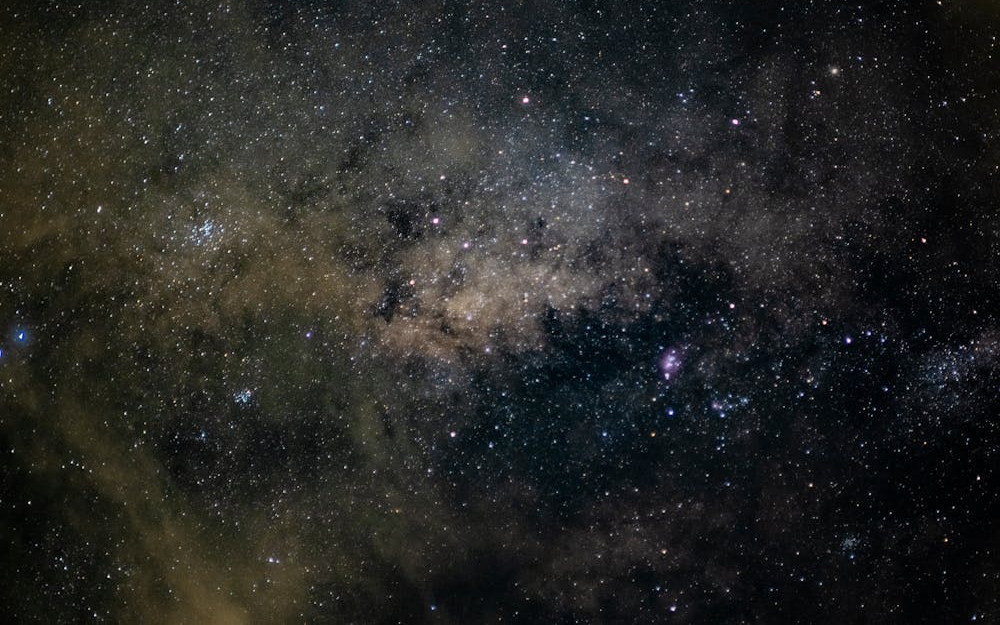
Before science, before philosophy, even before cities, humans already looked at the night sky and asked themselves: “Where did all of this come from?”
This is not just any question. It is the primordial question, the seed of all mythology, religion, and later, of science itself. And the first and deepest answer humanity found did not come from a telescope or a particle accelerator, but from narrative and symbol... it came from Cosmogony.
This article is the starting point of a great expedition. After all, what is Cosmogony? Why has virtually every human culture developed one? And what is the map we will follow on our journey around the world? We will seek to understand what the human art of creating origins is.

Beyond myth: Cosmogony as the foundation of reality
Cosmogony (from the Greek kosmos, “ordered universe,” and gonos, “origin”) is much more than a simple “creation myth.” It is a narrative and symbolic system that describes the origin and fundamental ordering of the universe.
It is interesting to think of Cosmogony as the assembly instructions of reality for a given culture. It is not satisfied with saying what exists; it explains why things are the way they are, establishing order out of chaos.
- From confusion to clarity: the primordial function of every Cosmogony is to transform Chaos — the unknown, the threatening, the undifferentiated — into Cosmos — the familiar, habitable, and meaningful world. It is the first and most important human tool for taming the mystery of existence.
The pillars of creation: the functions of Cosmogony
Why is this impulse so universal? Because Cosmogonies sustain civilizations and fulfill vital functions:
Explanatory-philosophical function
It is primordial science. It explains the origin of the sky, the earth, the gods, animals, and humanity itself, providing a coherent worldview.
Social and identity function
The narrative of the creation of the world is often the narrative of the creation of a people. It answers “who are we?” and “what is our place in all of this?”, forging a collective identity and strengthening community bonds.
Moral and legal function
The cosmic order serves as a model for social order. The laws, customs, taboos, and values of a society find their ultimate justification in the myth of the origin of the universe. What is “good” is what is aligned with the primordial order.
Ritual function
Cosmogonies are not only meant to be told, but to be lived. Through rituals, the community re-enacts the moment of creation, revitalizing the world and ensuring the continuity of the established order. It is a way of “recharging” reality.

A common language: the great themes of creation
One of the most fascinating aspects is discovering that, in opposite corners of the planet, cultures that never had contact developed surprisingly similar ideas. These are the archetypes or the “universal language of creation”:
- The Cosmic Egg: the entire universe contained within a primordial egg, which breaks open to give rise to everything (Hinduism, Taoism, Dogon).
- The Dive into the Waters of Chaos: a god or hero dives into the primordial ocean to bring up the mud that will form solid land (Mesopotamia, Vedic India, Shinto).
- The Sacrifice of the Primordial Giant: the material world is formed from the dismembered body of a cosmic being (Purusha in Hinduism, Ymir in Norse Mythology, Pangu in China).
- The Separation of Heaven and Earth: two principles (often Father Sky and Mother Earth) are united in an embrace that prevents life. Their separation, painful but necessary, creates the space where the world can flourish (Maori, Egypt, Greece).
- The Power of the Creative Word: reality is called into existence by the sound, speech, or thought of a deity (Judaism, Christianity, Islam, Hinduism).
A brief overview of Cosmogonies around the world
As we have seen, Cosmogonies are narratives that seek to explain how the universe, life, and the order of the world came into existence. Present in virtually all human cultures, they reveal not only conceptions about the origin of the cosmos, but also values, social structures, and ways of relating to the sacred.
By observing different traditions, it is possible to identify recurring patterns, such as the emergence of order from chaos, the action of divine or ancestral forces, and the attribution of a specific role to humanity within creation.
In this context, we can examine notable examples such as Jewish Cosmogony, centered on creation through the word; Yoruba Cosmogony, linked to the organization of the earth and the actions of the orixás; Hindu Cosmogony, with its cosmic cycles; and Chinese Cosmogony, based on the balance between opposing forces.
Each of them offers a distinct symbolic key to understanding existence.
Conclusion
Cosmogony expresses the human effort to understand the origin of the world and of itself. Each culture has developed its own narratives to give meaning to the cosmos, to life, and to the order of existence.
Far from offering a single answer, these stories reveal different ways of perceiving the sacred, nature, and the place of the human being in the universe. By getting to know them, we expand our understanding of the symbolic diversity that sustains the human experience.
If this article has sparked your interest, take the opportunity to explore other content about Cosmogony and deepen this journey through the multiple visions of creation!
May the Light of Love be the guide of all paths, at all times, in all circumstances, with all the people. And may Love foster Peace!